Product design
PTMI
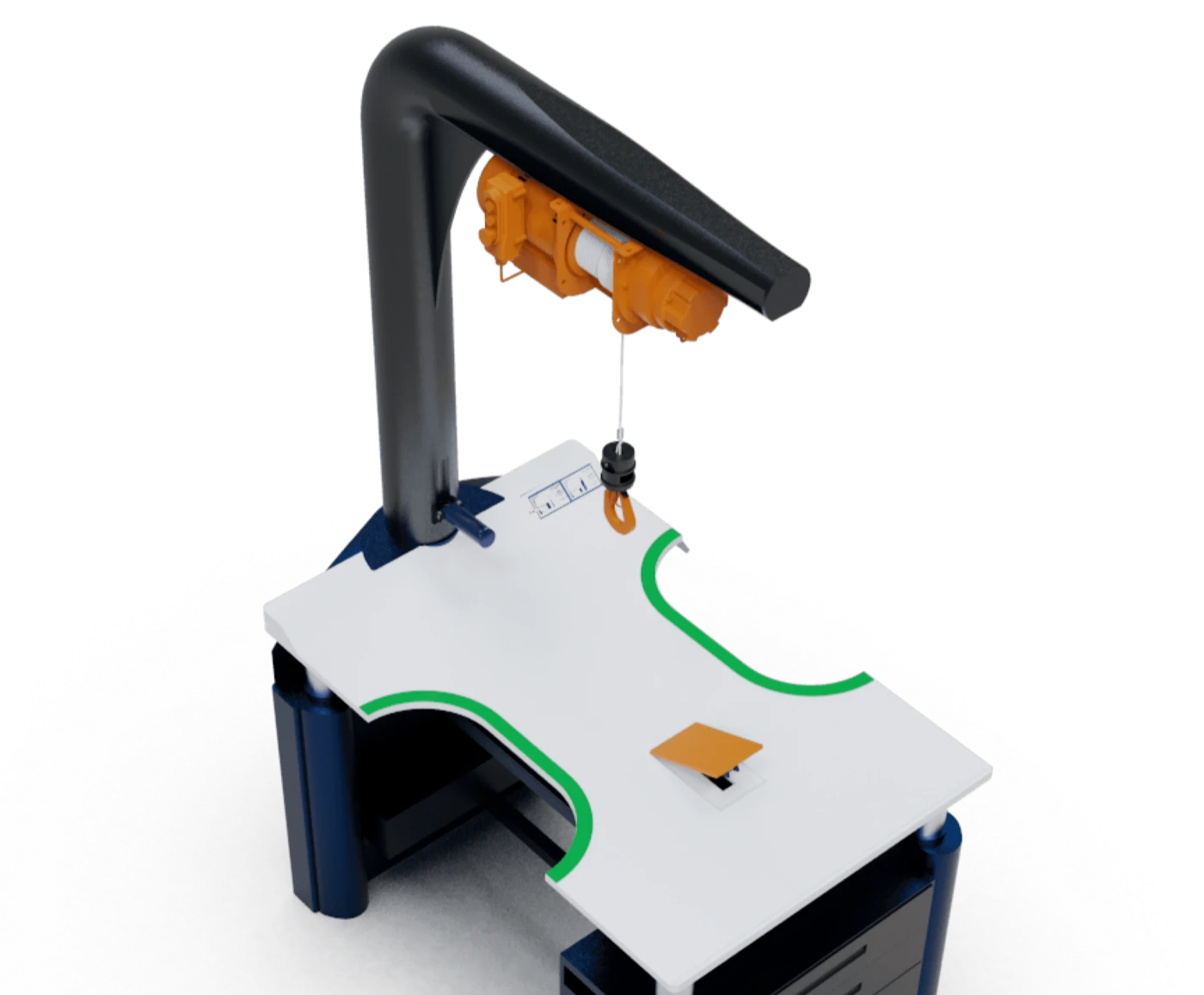
An ergonomic workstation for the injection mold repair area of a footwear factory.
Product design
An ergonomic workstation for the injection mold repair area of a footwear factory.
Overview
I led the project end to end: on-site research, the ergonomic evaluation of the old workstation, concept, prototypes and the validation of the final design with the operators.
preventive maintenance tasks a month, against a target of 4.
postures evaluated with RULA, replaced by the new way of working.
PTMI workstations built and put to work in the repair area.
Problem
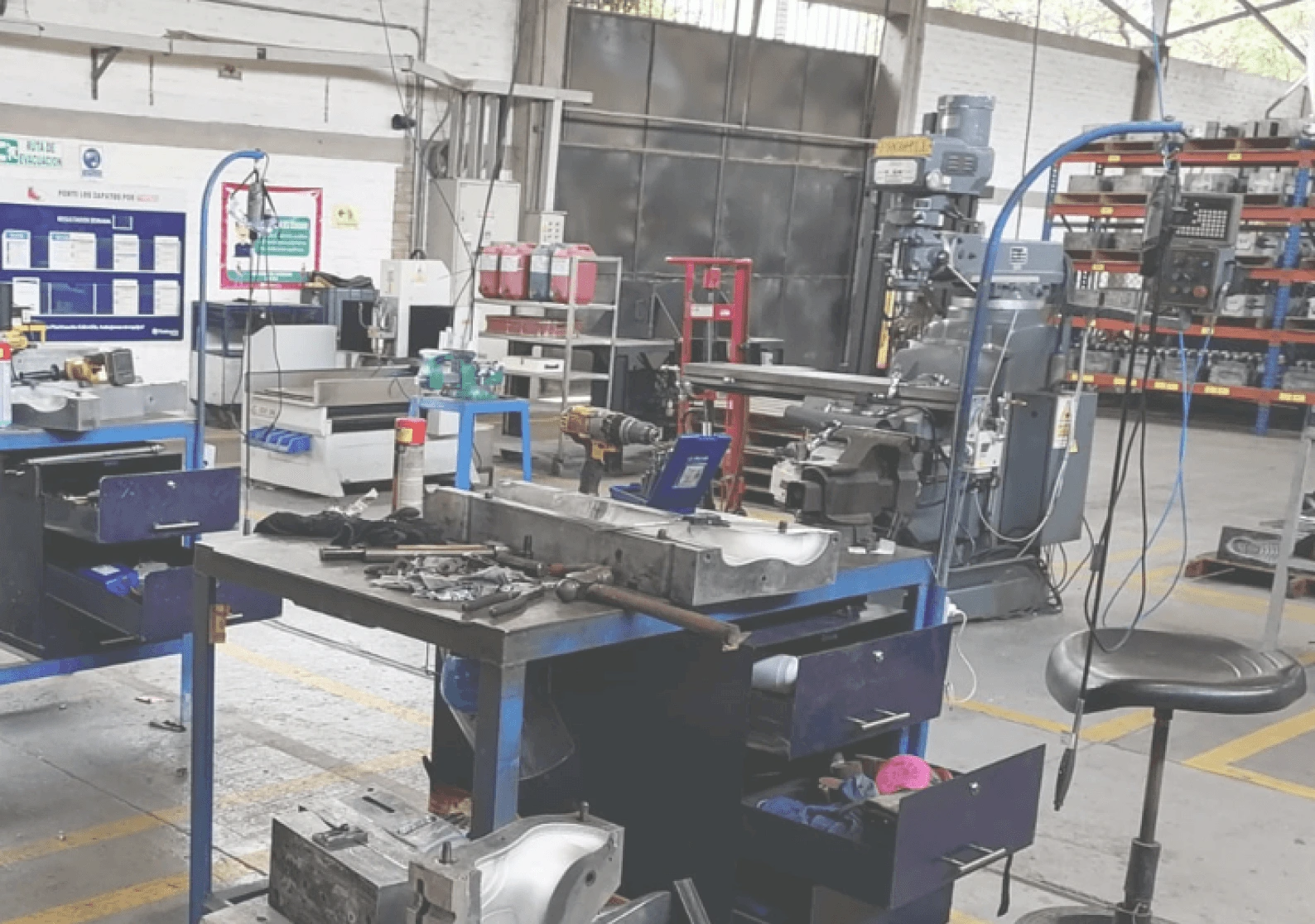
A footwear factory in Yumbo, Colombia, has made only the Llanero boot since the pandemic. Its injection molds wear out faster than ever, and the maintenance area receives more damaged molds than it can repair.
Problem
The team could not keep up with the molds waiting for repair, so preventive maintenance kept slipping. The company aimed for 4 preventive tasks a month and reached 2 at best, delaying production.
Method
A qualitative methodology with an observational and prospective approach, in four phases.
Research · Secondary
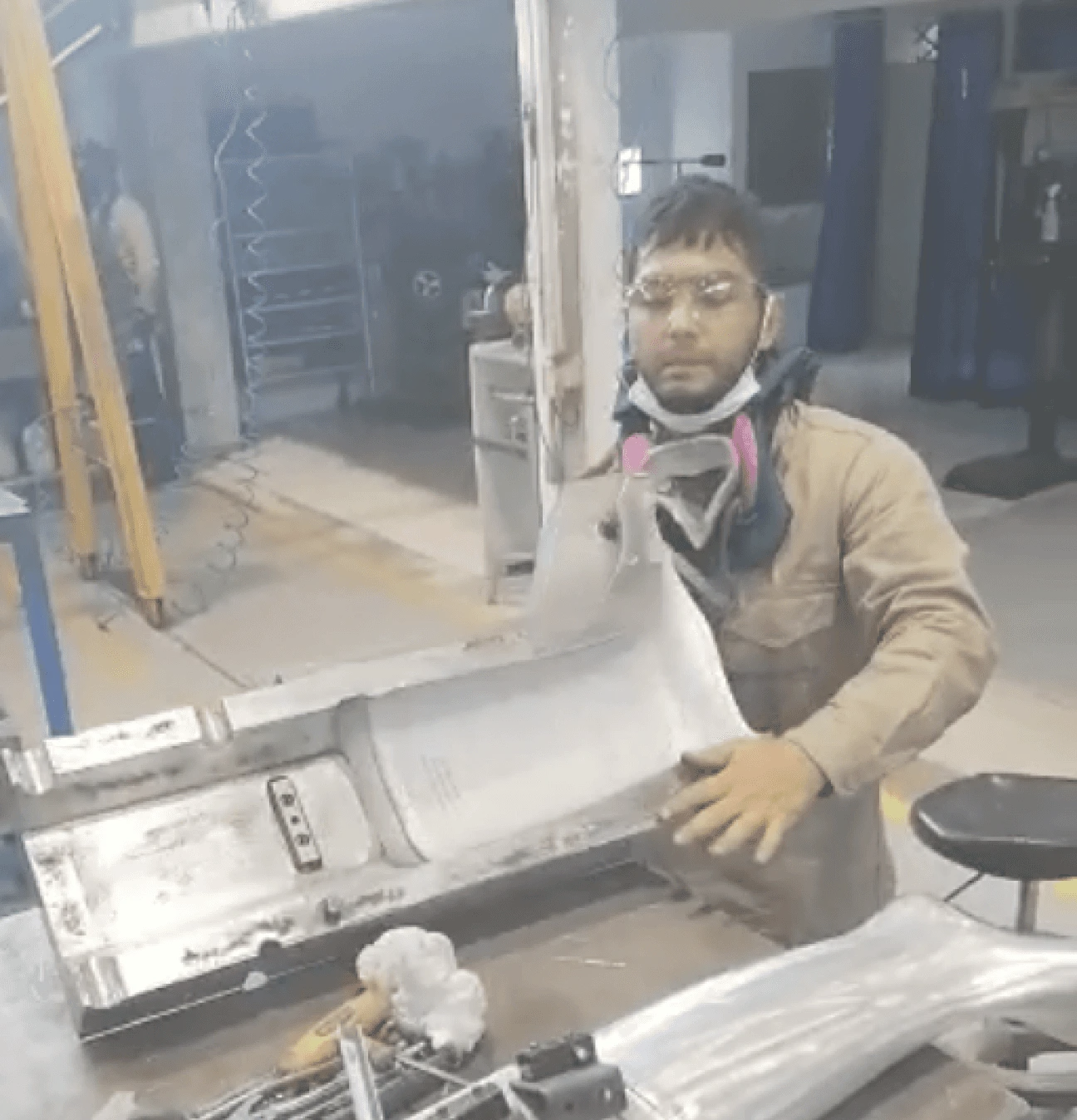
Moving molds by hand means lifting, pushing and pulling heavy steel. Done without proper ergonomic conditions, it leads to fatigue, injuries and musculoskeletal disorders.
of workplace accidents come from the manual handling of loads, according to the ILO.
of workers in this kind of activity can be affected by musculoskeletal disorders such as low back pain.
is enough to become a risk when the posture and conditions are unfavorable.
Research · Secondary
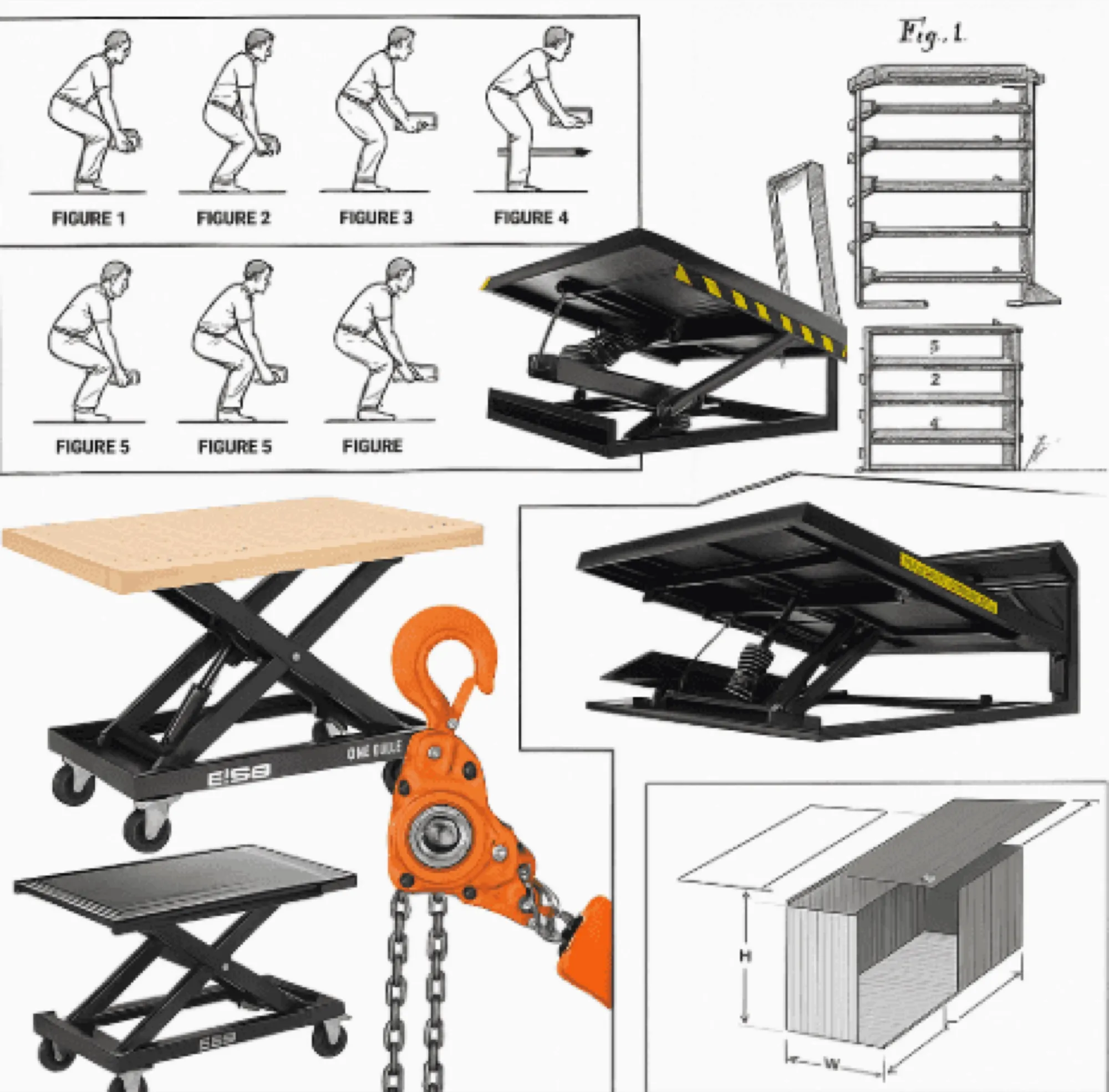
I reviewed patents and existing solutions for moving heavy loads and leveling work height, the two systems the new workstation would need.
Research · Primary
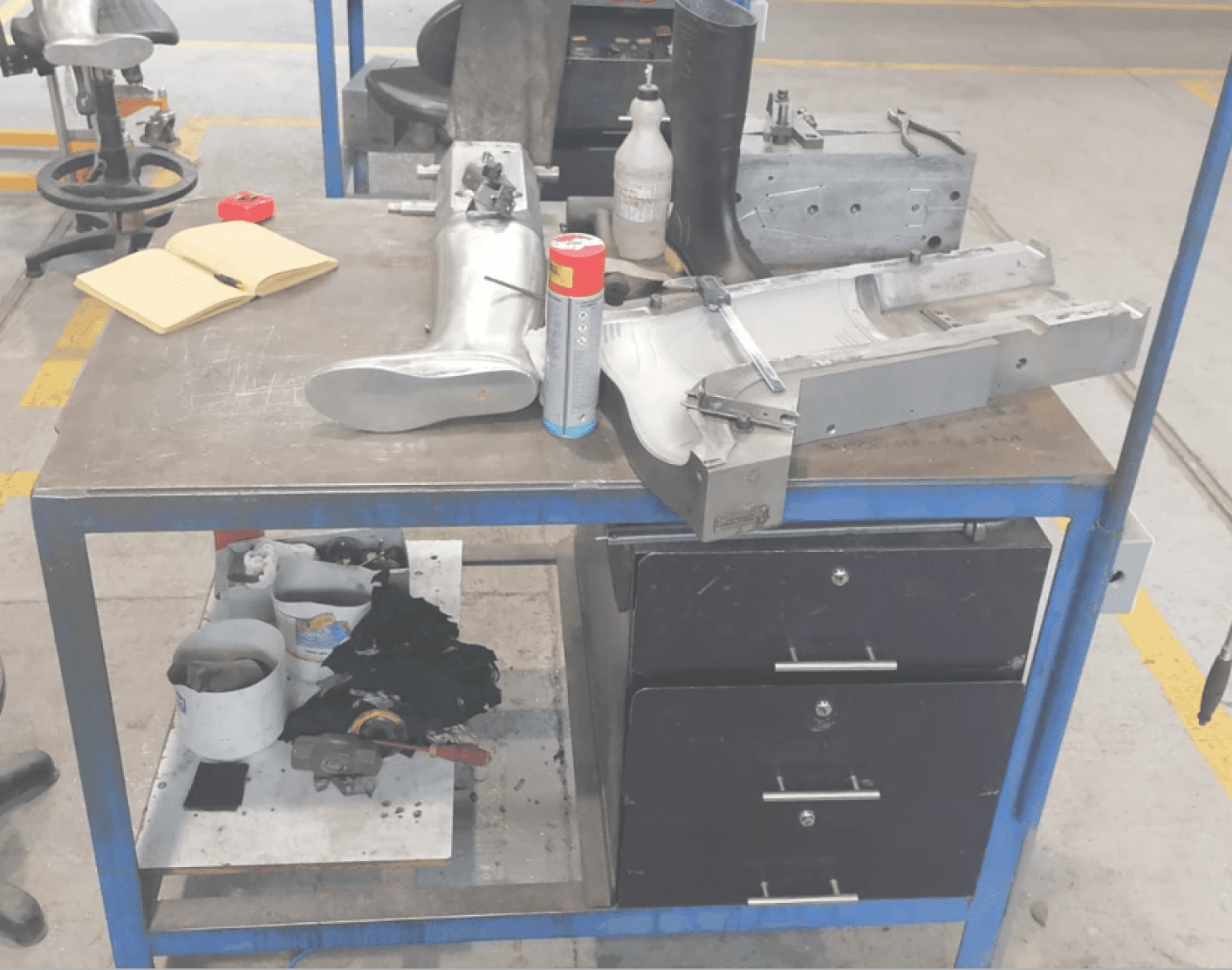
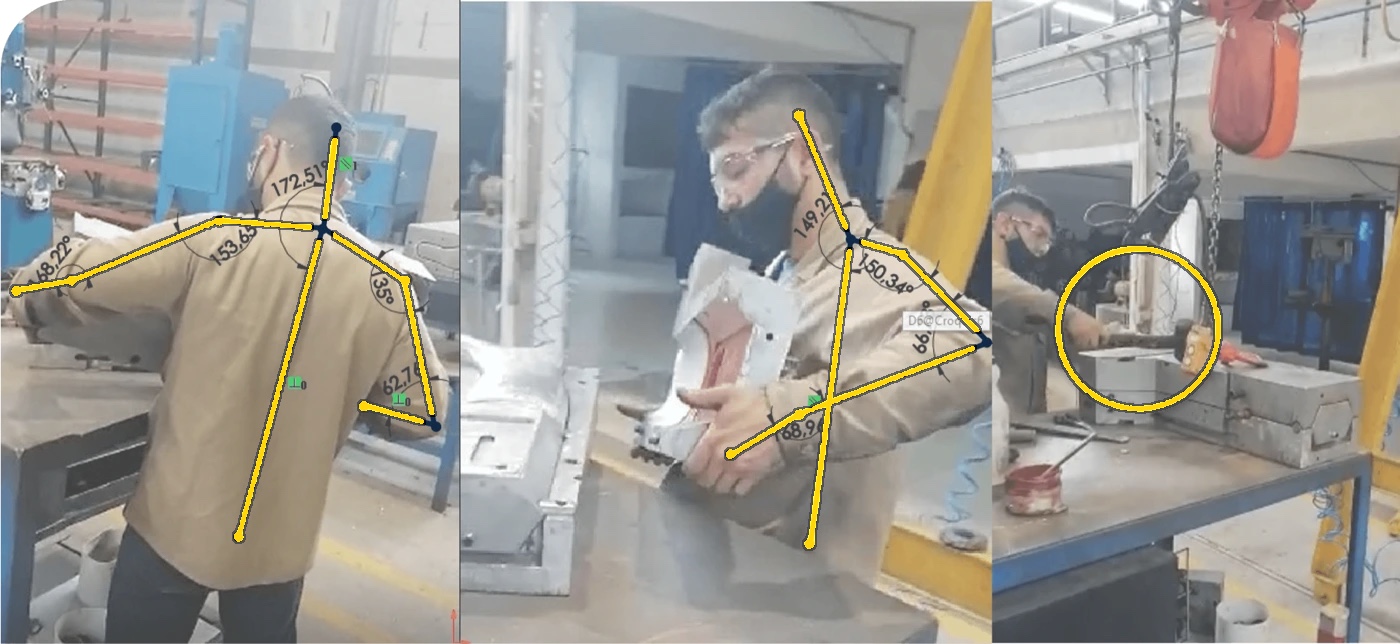
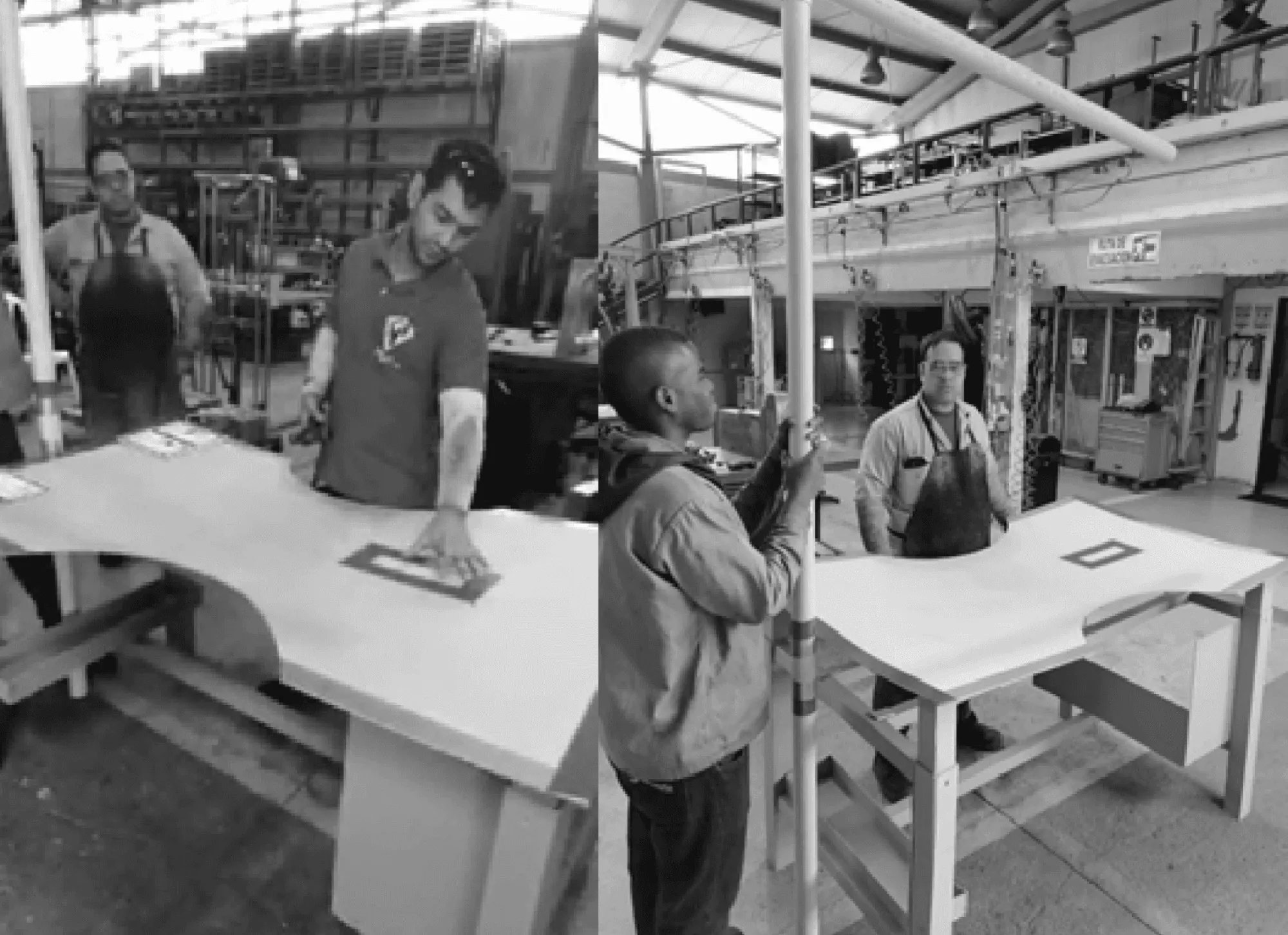
Operators flipped, pushed and pulled steel molds across a one-meter-high table. The company met safety regulations, but the work carried a risk of long-term microtrauma.
I analyzed the workstation of an operator 1.67 m tall and 73 kg, who reported right shoulder pain and lumbar fatigue.
Three methods to measure the risk instead of guessing it: the INSHT guide for load handling, RULA for postures and the UNE-EN 614 standard for the table.
Some molds exceeded the acceptable weight for manual handling, raising the risk of injury.
Six postures adopted while handling the molds were analyzed, to see where the body was under the most strain.
The table's dimensions did not meet the recommendations for safe, comfortable work, and there was no material showing operators how to use the equipment.
Insights
After some time at the table, operators grow tired and fatigued from the forces and postures needed to handle the molds, and their productivity drops.
Insights
Ideate
A product that balances the well-being of the operators with the productivity of the company, through elements that make the task easier.
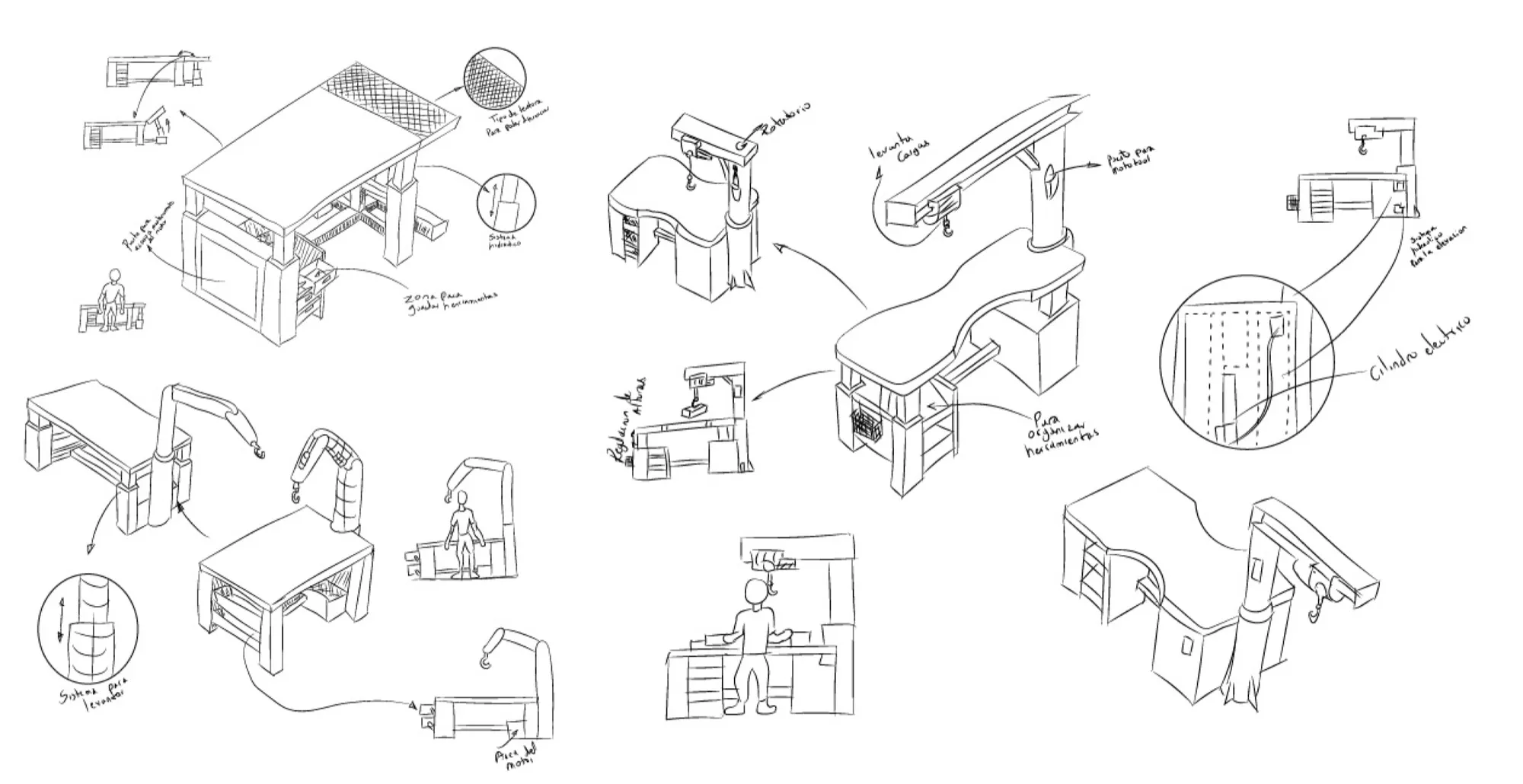
Brainstorming, SCAMPER, morphing and a moodboard produced several directions, judged against the four requirements above.
Development
A quick model and a full-size mock-up let an operator try the working height and the handling before anything was built.
Development
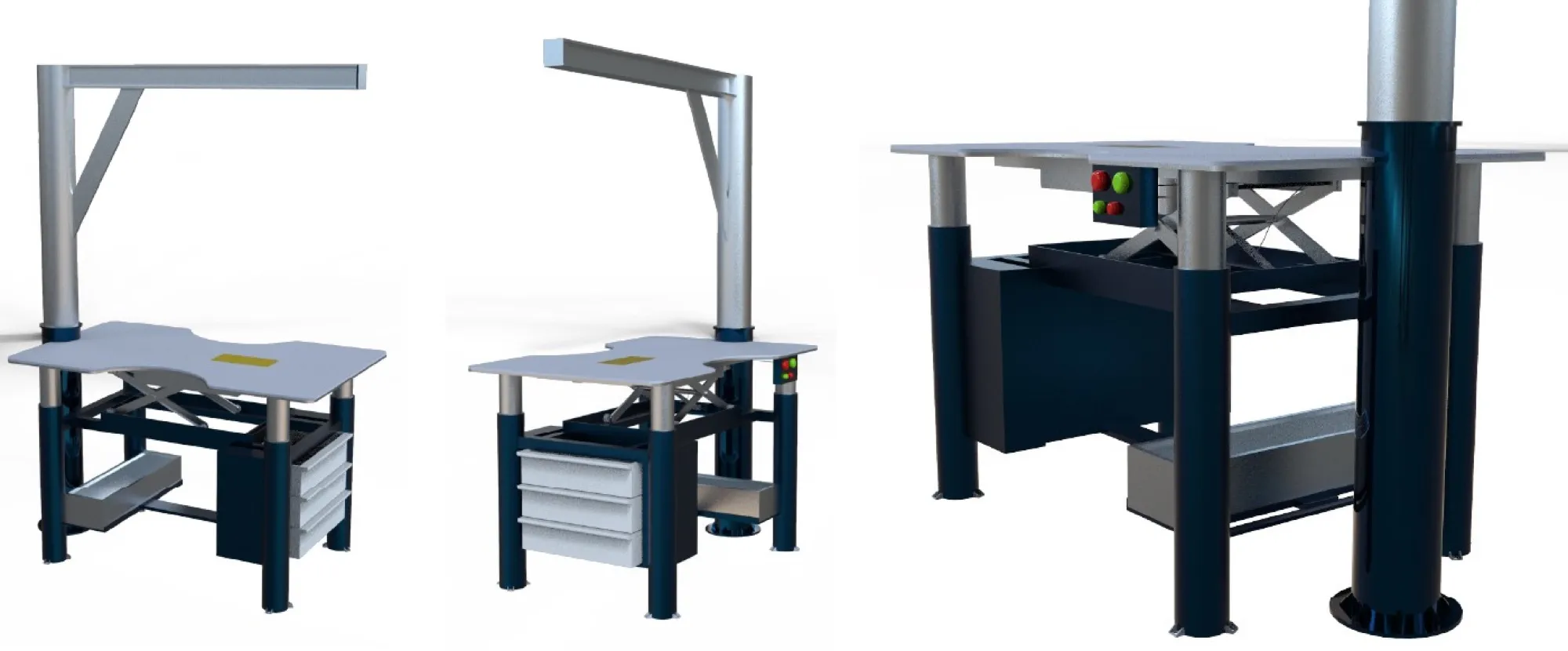
Each part of the workstation answers one of the requirements found on the shop floor.
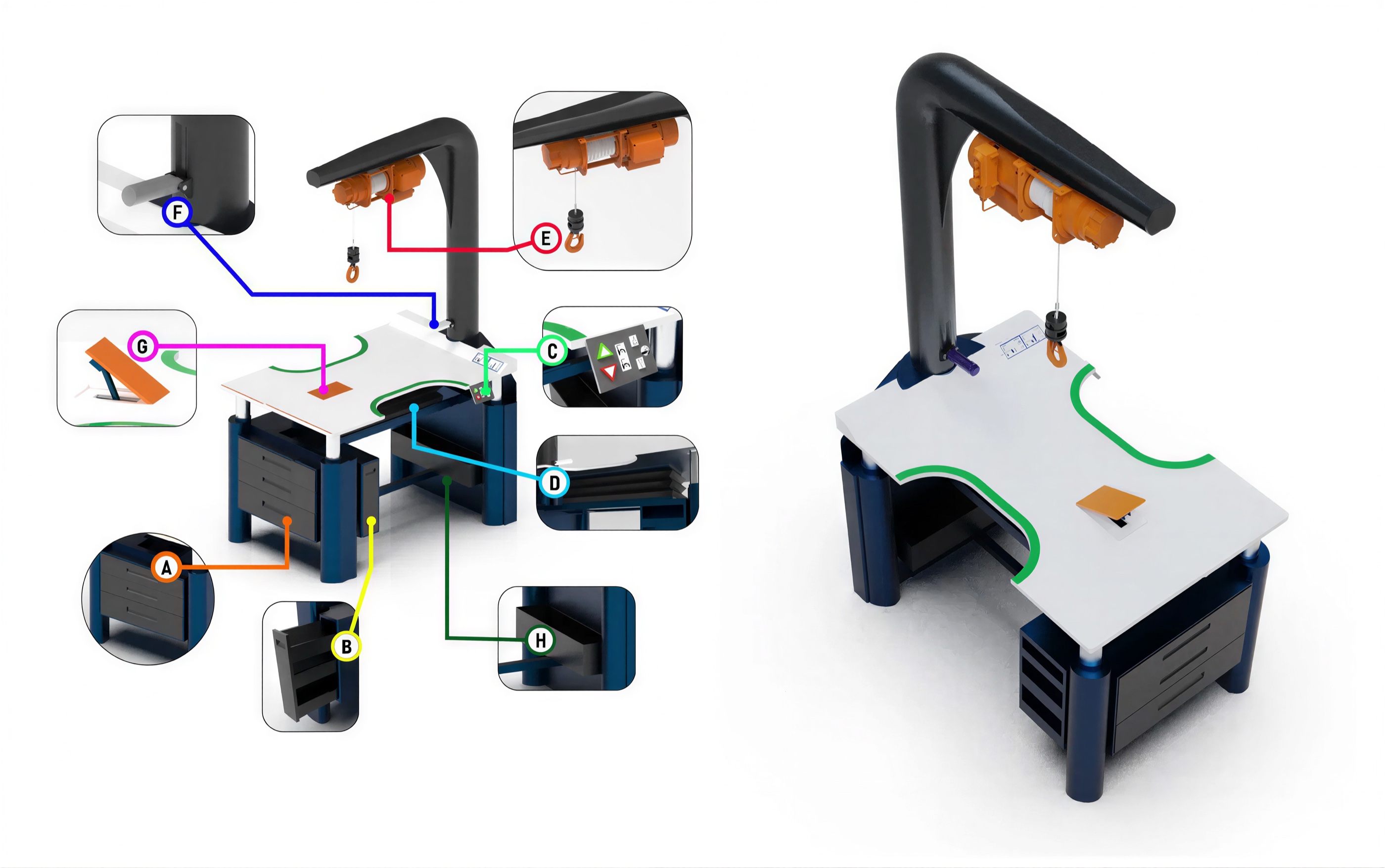
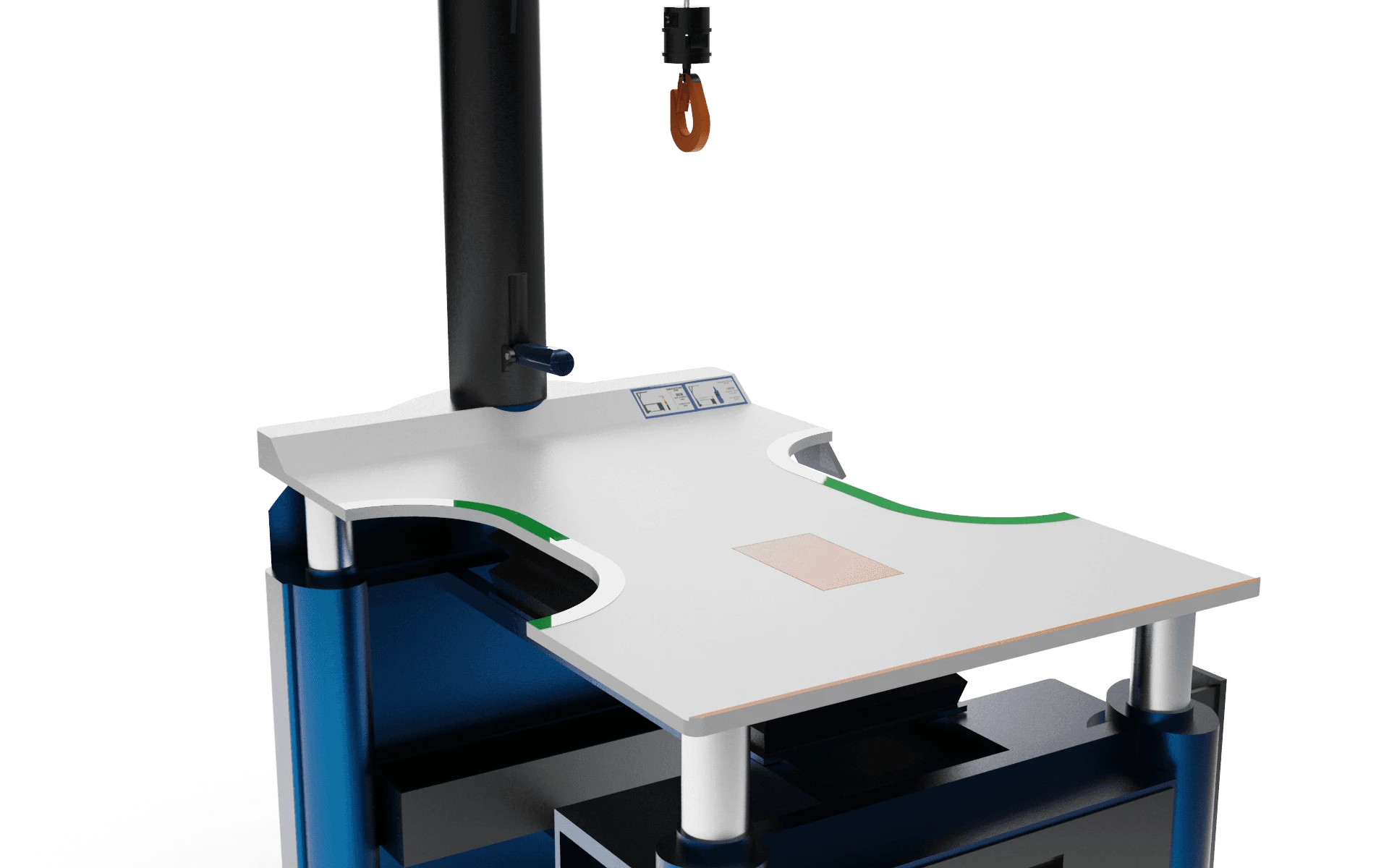
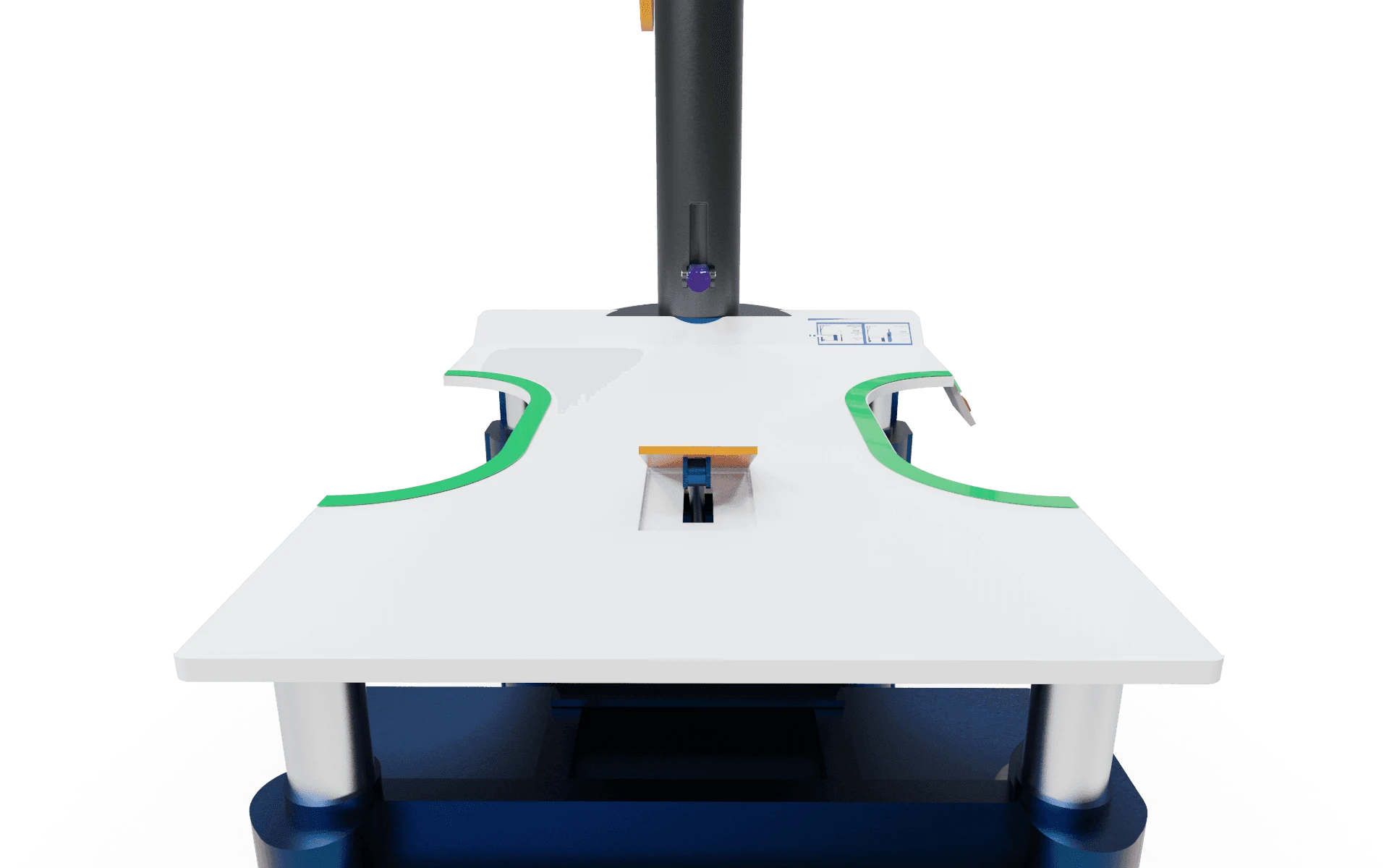
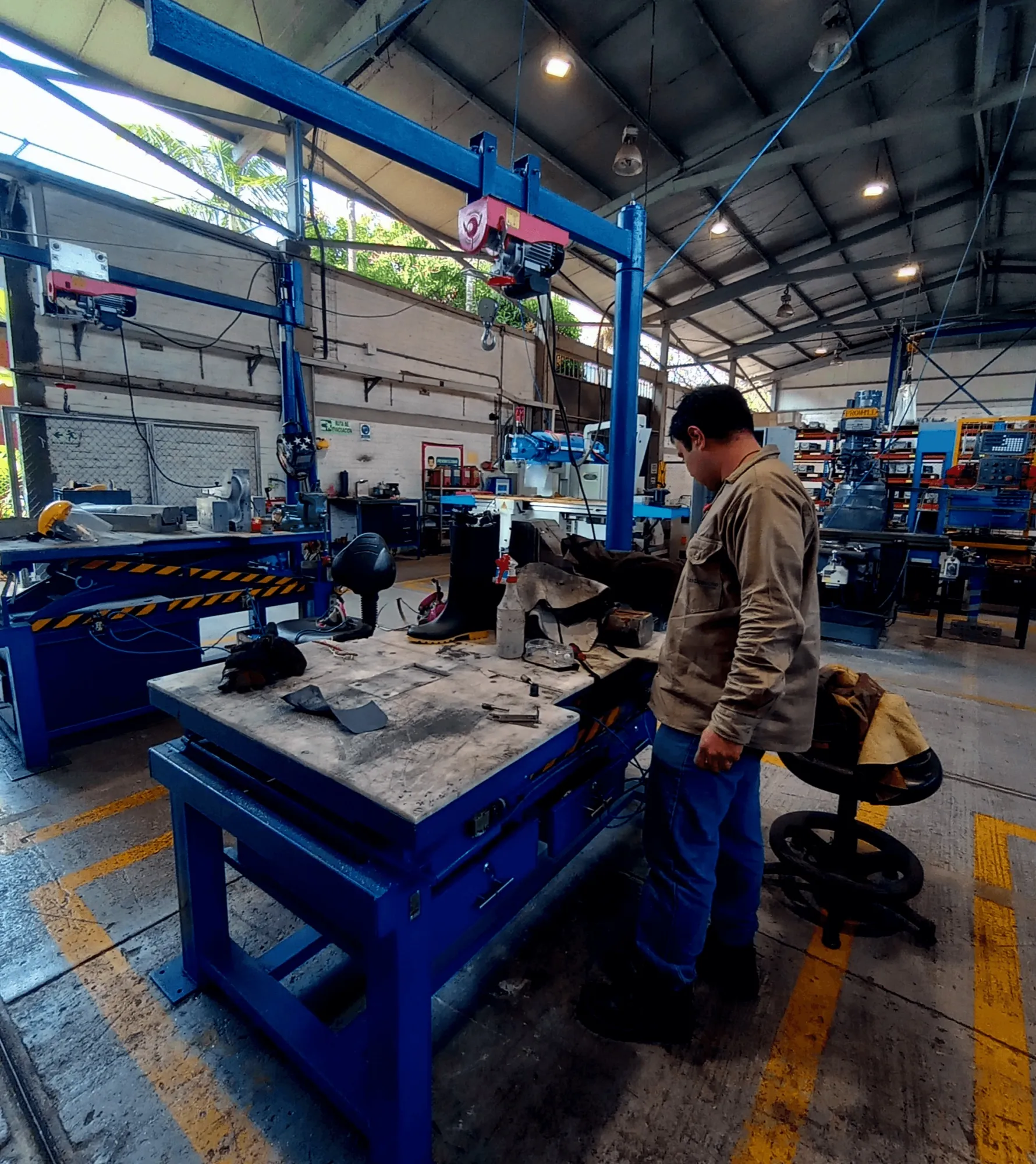
The work surface adjusts to each operator, replacing the fixed one-meter table that failed the UNE-EN 614 check.
The mold is moved and turned by the workstation, so operators stop flipping, pushing and pulling heavy steel by hand.


Validation
I compared the new workstation with the old one on ergonomics, biomechanics and usability. Every posture flagged in the evaluation was replaced, and the repair process got faster.
| Measure | Before | With PTMI |
|---|---|---|
| Postures evaluated (RULA) | 6 in use | All replaced |
| Work height | Fixed at 1 m | Adjustable |
| Mold handling | By hand | Supported |
| Maintenance a month | 2 (target 4) | 8 |
Takeaways
RULA, INSHT and UNE-EN 614 turned "operators are tired" into problems the team could agree on and fix.
Operator health was the cause; maintenance done each month was the number the company cared about. The case was won on both.
Putting a rough mock-up in front of an operator early cost little and settled questions no render could.